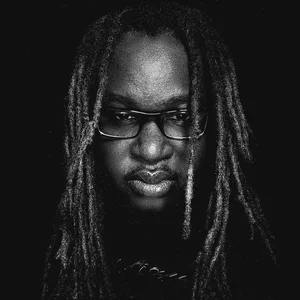
From The Lazarus X Auteur Theory
Filmmaking is regularly described as a collaborative medium. I understand why. Films bring together different people, abilities, experiences, and forms of creative labor. But that description becomes less useful when people treat collaboration as inherently valuable without asking what it actually contributes. Bringing more people into a project does not automatically deepen its artistic life. For me, collaboration must offer something more than participation: it must create the possibility that I, too, will be elevated.
I have spent years developing across writing, directing, cinematography, editing, and other disciplines because these practices belong to the same creative experience for me. When I write, I often already see the image, feel the rhythm, and understand something about the emotional atmosphere. Those intentions continue developing as I shoot and edit. Inviting someone into that process is therefore a meaningful decision. I want to understand what becomes possible through our relationship that would be less possible without it.
Authorship Extends Across the Work
Auteur theory provides one way to discuss this relationship between an artist and the larger shape of a film. Its history includes an emphasis on the director’s distinctive personality and recurring artistic concerns, even within a medium involving many contributors. That does not mean an auteur must perform every production role. It does mean that collective production and recognizable individual authorship can exist together. The presence of collaborators does not, by itself, settle where the work’s artistic direction originates. Dartmouth’s guide to auteur theory.
My particular experience of authorship involves working across several disciplines. Writing a scene and deciding how its subject will relate to the lens can feel like connected parts of the same thought. The lighting continues that thought, and the edit may reveal something about it that I could not fully recognize while writing. I do not experience those movements simply as a collection of separate jobs. They are ways of continuing to discover and express the work.
That is why a conventional division of labor cannot be the only measure of a legitimate filmmaking practice. Some filmmakers develop their strongest work through extensive specialization. Others have cultivated the ability and desire to remain directly involved across several forms. My interest is in finding the working arrangement that serves the particular artistic experience I am trying to create. A larger crew is useful when its contributions make that experience stronger.
Collaboration Must Bring Something Into the Room
What attracts me to collaboration is the possibility of encountering another developed imagination. I want someone who can recognize what I am attempting and contribute a perception, choice, or ability that expands it. Their contribution might be a performance I could not have anticipated, an understanding of light that deepens the emotional atmosphere, or an editorial discovery that changes how a scene breathes. What matters is that something meaningful becomes available through their presence.
Richard Linklater describes this possibility when he speaks about collaborators bringing “more ideas than I could ever imagine.” His point emerges from a discussion of auteurism in which he describes inviting other artists into a creative space while continuing to pursue the film he has in mind. That is a useful understanding of collaboration because it gives other people’s creativity a real purpose. Their participation helps the work exceed the limits of one person’s imagination. Linklater’s interview with Reverse Shot.
Rian Johnson expresses a related desire: “What I’m looking for is to find collaborators who are going to come in and surprise me with their choices.” A surprise has value when it opens something within the work. It might complicate an intention, expose a possibility, or make an emotional moment more specific. That is the kind of encounter I want: another artist’s choices giving me something worth responding to. Johnson’s interview about Glass Onion.
Being elevated does not require someone to surpass me in every discipline. It requires them to bring something of substance to the relationship. A collaborator might understand one aspect of a character more deeply than I do, recognize an opportunity I have overlooked, or challenge an assumption in a way that improves the film. Their value comes from what they make possible through their particular attention, development, and imagination.
Development Must Be Reciprocal
I am willing to explain my intentions, share references, discuss a character, and explore possibilities with another person. Those conversations can be among the most rewarding parts of filmmaking. But there is a difference between developing a work together and spending the relationship supplying nearly all of its artistic curiosity. When I must continually generate the questions, provide the references, identify the emotional possibilities, and explain why those possibilities matter, I begin to wonder where my own development enters the exchange.
Teaching and mentorship have value. I have offered both throughout my career, sometimes because I wanted to help someone grow and sometimes because a production required more guidance than I expected. But mentorship carries a different responsibility from a partnership between developed artists. If a relationship asks me to serve primarily as someone’s teacher, I want that understood clearly rather than assumed to be the natural obligation of the filmmaker.
Robert Rodriguez’s description of his relationship with James Cameron offers a simple expression of reciprocity: “We really inspired each other to go do more stuff.” He connects that inspiration to their interest in learning different aspects of filmmaking, including editing and camera operation. What interests me is the movement in both directions. Each person’s practice encouraged the other to expand his own. Rodriguez’s interview about working with Cameron.
That is a reasonable desire for any artist. I can want another person to benefit from working with me while also wanting to leave the relationship with new discoveries of my own. Generosity does not eliminate my need for stimulation. Experience does not mean I have finished developing. The fact that I can guide someone else should not make my own growth disappear from the conversation.
A Personal Vision Can Welcome Other Artists
A strong artistic vision gives collaboration a direction. It establishes the emotional and imaginative world within which contributions acquire meaning. When I invite someone into a project, I am asking them to engage with something that already has intentions, concerns, and a developing language. Their freedom becomes most useful when they understand what they are entering and can make choices that deepen it.
Godfrey Reggio makes this relationship explicit when he says, “The film must satisfy my sensibilities, my muse. They are not made by committee.” In the same answer, he acknowledges that his films exceed what he can accomplish alone and describes choosing collaborators whose talents expand his capacity. His account allows personal artistic direction and substantial dependence on others to coexist. It also makes clear that collaboration requires more than assembling talented individuals. Reggio’s interview with Park Circus.
For me, welcoming another artist does not require treating the project as artistically undefined. I can have a clear intention and still recognize a better possibility when someone reveals it. I can remain the author of a work while being changed by the process of making it with others. What I need is a relationship in which another person’s contribution enters the work with understanding, rather than requiring the work to become less specific so that they can participate comfortably.
The Person Creating the Opportunity Must Matter Too
These questions become especially important when I am investing my own money, labor, and time. A project may give collaborators footage, experience, creative challenges, relationships, or opportunities to demonstrate their abilities. Those benefits can be meaningful, and I want people to receive them. But I am also a person inside that arrangement, with limited resources and an artistic life that deserves consideration.
If bringing someone into the project creates substantial additional explanation, supervision, or correction, that becomes part of the collaboration’s actual cost. I have to consider it alongside whatever they contribute. An arrangement can benefit another person while making my own creative process more difficult. Calling it collaborative does not answer whether it is a worthwhile relationship for me.
I want to create opportunities that have artistic substance for everyone involved. That includes the person imagining the work, financing it, organizing its production, and carrying responsibility for its completion. My willingness to make something possible for others should leave room for a basic question: what becomes possible for me through their participation? That question deserves an answer beyond the assumption that a filmmaker should always want more collaborators.
Trust Begins with a Shared Artistic Language
The trust I am talking about begins with understanding something about another person’s artistic formation. It involves recognizing how they encounter the world, what has developed their imagination, and what they are capable of perceiving within a work. I can like someone, respect their professionalism, and believe they have good intentions while still feeling uncertain about whether they understand the artistic language I am speaking. Creative trust requires me to discover that understanding through our conversations and choices.
My writing has been shaped by James Baldwin, Ernest Hemingway, Mark Twain, Zora Neale Hurston, and Emily Dickinson, alongside writers such as Fyodor Dostoevsky and Sonia Sanchez. My visual references include Christopher Doyle, James Laxton, Roy DeCarava, and Malik Sayeed. My directing references move through Spike Lee, Wong Kar-wai, Steve McQueen, Steven Spielberg, and Charles Burnett, with Bernardo Bertolucci and Julie Dash also belonging to that formation. These references carry different relationships to emotion, rhythm, beauty, interior life, and the possibilities of an image.
They also travel across disciplines. A literary influence can shape how long I want a face to remain onscreen or how much of a feeling I want to leave unspoken. My interest in the moving-image work of Khalil Joseph and Terence Nance can enter my thinking about structure and rhythm. Music I love, including Sade and Labelle, belongs to conversations about sensuality, power, vulnerability, and emotional expression. I do not leave those relationships behind when I move from writing to cinematography or from directing to editing.
James Laxton describes a closely related process when discussing If Beale Street Could Talk: “The visual conversation stemmed from James Baldwin.” He explains that Baldwin’s writing informed decisions about format, light, and lenses. He also connects his trust with Barry Jenkins to their shared history of learning cinema and developing a language together. That is a concrete example of the kind of understanding I mean: literature becoming part of a visual conversation between collaborators. Laxton’s interview with Awards Daily.
A collaborator does not need to possess an identical list of influences. I want to encounter their references too, including work I have never experienced. But I need to recognize an ability to engage with what those references mean in practice. If I explain that Baldwin informs the emotional atmosphere of a scene, can we have a meaningful conversation about how that atmosphere might become visible? Can the person connect language, light, performance, and silence without treating each as an unrelated department?
My relationship to poetry makes this especially important. I am a poet, and poetry is part of how I experience romance, intimacy, desire, masculinity, vulnerability, and Blackness. Those relationships shape how I see a subject, how I position the lens, how I understand darkness, and how I recognize the emotional force of an edit. When I ask whether someone lives poetry, I am asking whether poetic attention has a place in their life—whether they have cultivated a sensitivity that can meet mine within the work.
Trust develops when I begin to see that sensitivity expressed through another person’s choices. I hear it in the questions they ask and notice it in the connections they make. I feel it when their response reveals that they understand why a detail matters, even if they would approach it differently. From there, I can become curious about what they might introduce, challenge, or transform. Their difference becomes something I can explore because we have established enough shared understanding to work meaningfully together.
That is the collaboration I want to make room for. I want to encounter artists whose development can meet my own and whose imagination gives me a reason to open the work further. I want the satisfaction of helping someone discover something alongside the experience of being helped toward a discovery myself. My ability to elevate another person does not exhaust what I want from an artistic relationship.
Because at times, I want, need, and desire to be elevated too.